Whale Watching in the Azores: Ponta Delgada, Pico or Faial?
Updated October 16, 2026 · 6 min read
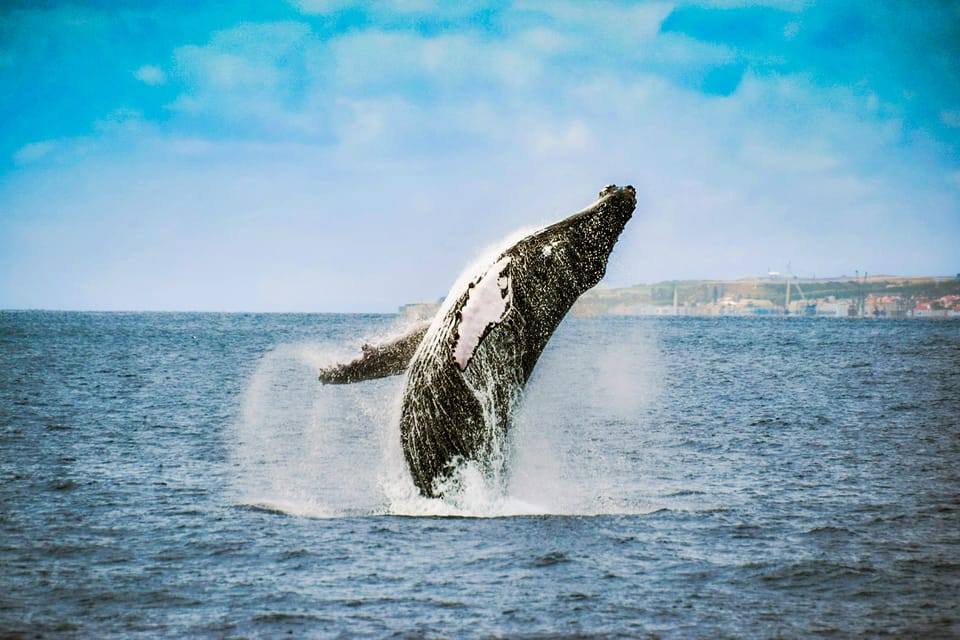
There is no honest single answer to which Azorean island gives you the “best chance” of seeing whales. The animals are wild, sea conditions change and no harbour can guarantee a sighting. Choose the departure that fits the island where you are staying: Ponta Delgada for the broadest choice on São Miguel, Lajes do Pico for a strong whaling heritage and a focused marine outing, or Horta for an expedition-style trip from Faial.
The Azores tourism authority describes the archipelago as habitat for more than 20 types of cetaceans, including resident and migratory species. That explains why whale watching is offered on several islands. It does not mean every species is present on every trip, or that moving islands for one departure improves your odds.
The three departure points compared
| Departure | Practical advantage | Best fit |
|---|---|---|
| Ponta Delgada, São Miguel | Most convenient if this is your holiday base | First-time visitors who do not want an inter-island journey |
| Lajes do Pico | Direct link to Pico’s whaling history | Travellers already staying on Pico |
| Horta, Faial | Research and monitoring format available | Visitors who value interpretation as much as the sighting |
Ponta Delgada: the practical choice on São Miguel
The Whale and Dolphin Watching Trip from Ponta Delgada is the most-reviewed Azores activity in the available GetYourGuide selection. It is a three-hour boat trip with a marine biologist and starts at €70. This is the sensible default if your accommodation is on São Miguel: you keep the day simple and avoid adding flights or ferries merely to board another boat.
The trade-off is the busy departure point. A high review count tells you that many people have booked the product; it does not establish that Ponta Delgada has a higher biological sighting rate than Pico or Faial.
Check dates for the whale and dolphin trip from Ponta Delgada
Lajes do Pico: choose it because you are on Pico
The Whale Watching Experience from Lajes do Pico also lasts three hours and starts at €70. Its real distinction is location. Pico retains a particularly visible connection to the islands’ former whaling culture, now redirected towards observation and education.
Book this departure if Pico is already part of your itinerary. Do not treat it as a day trip from São Miguel: the Azores are an archipelago spread across several island groups, and an inter-island transfer can cost more time and uncertainty than the boat trip itself.
Horta: monitoring rather than a standard cruise
The Whale and Dolphin Monitoring Expedition from Horta starts at €89. Its listing presents an expedition linked to ongoing monitoring, with a researcher or biologist when available. That wording matters: it is a good fit if you want to understand how observations are recorded, but it is not a promise that a scientist will be present on every departure.
Faial and Pico sit close together in the central group, so either can make sense in a two-island itinerary. Let your accommodation and ferry plan decide; wildlife does not recognise the line between their departure ports.
What actually affects the day
Weather and swell decide whether boats can leave and how comfortable the trip feels. Operators may change or cancel a departure when conditions are unsuitable. Keep the outing early enough in your stay to leave room for rescheduling, and read the booking page for the operator’s current policy.
No responsible trip can promise a particular species. Ask what happens if no cetaceans are seen: policies differ, and a second outing may depend on capacity rather than come as a refund. If you are prone to seasickness, seek advice from a pharmacy or doctor before travelling; choosing a larger boat or sitting where the operator recommends may also matter more than the island name.
The straightforward recommendation
For most first-time visitors based on São Miguel, take the Ponta Delgada whale and dolphin trip. Choose Lajes because Pico is already your base, and choose Horta for the monitoring-led format. The best departure is the one you can reach without turning a three-hour wildlife outing into an inter-island logistics exercise.